Understanding Mardi Gras Season in New Orleans
Mardi Gras in New Orleans isn’t just one day — it’s an entire season of parades, parties, and traditions that build up to Fat Tuesday. The exact dates change every year because Mardi Gras is tied to the Easter calendar, but the season generally runs from early January (King’s Day or Epiphany) through Fat Tuesday, which falls sometime between early February and early March.
Key Dates to Know
- King’s Day (January 6): The official start of Carnival season. Smaller parades and events begin.
- Two weeks before Fat Tuesday: The parade schedule ramps up with nightly parades and big weekend events.
- Lundi Gras (the Monday before Fat Tuesday): Major parades and riverfront festivities.
- Fat Tuesday: The final, biggest day of Carnival with parades from morning through afternoon.
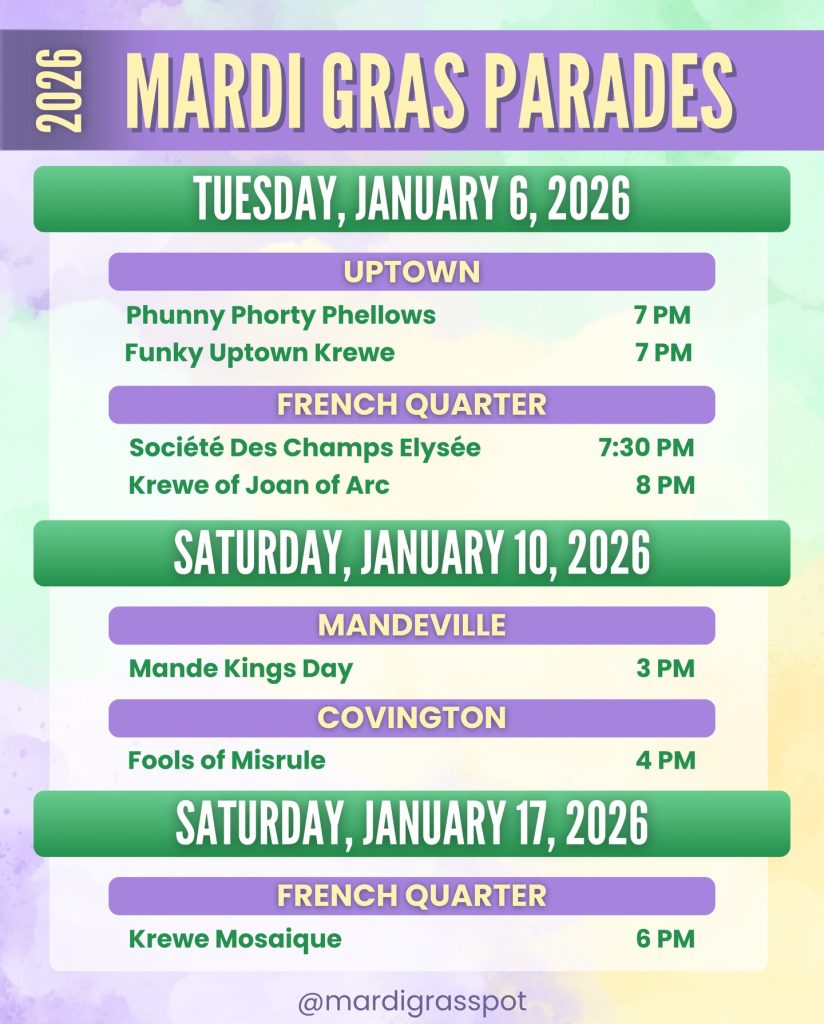
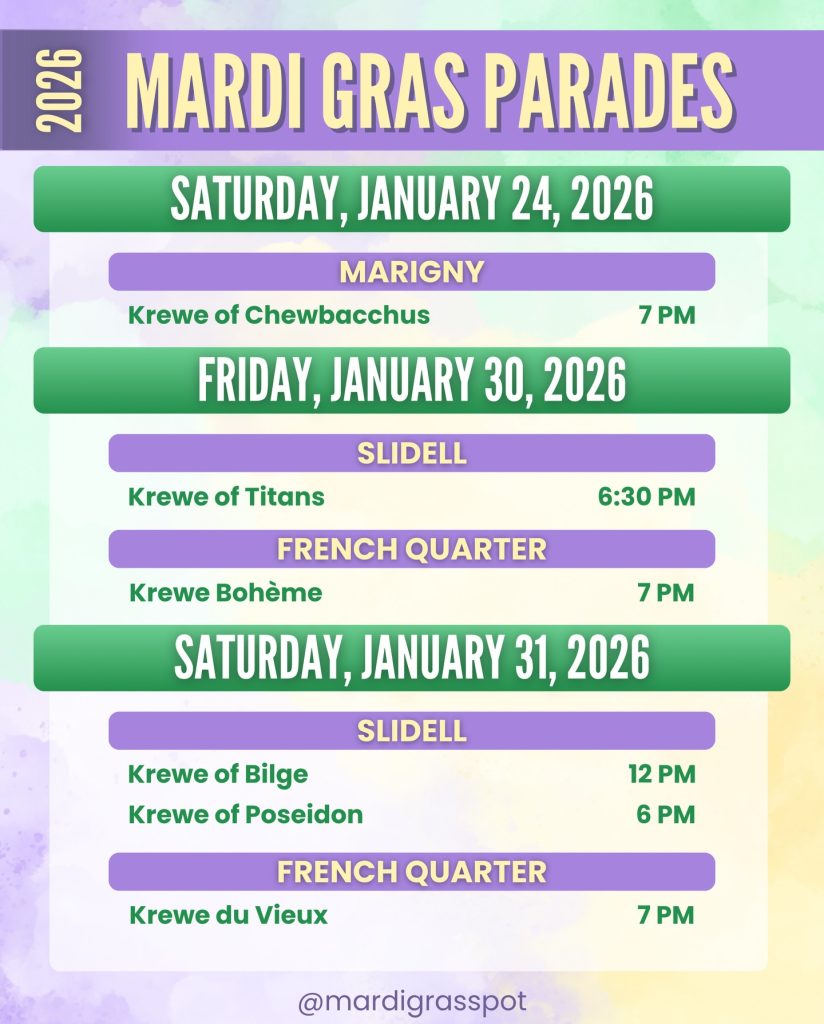
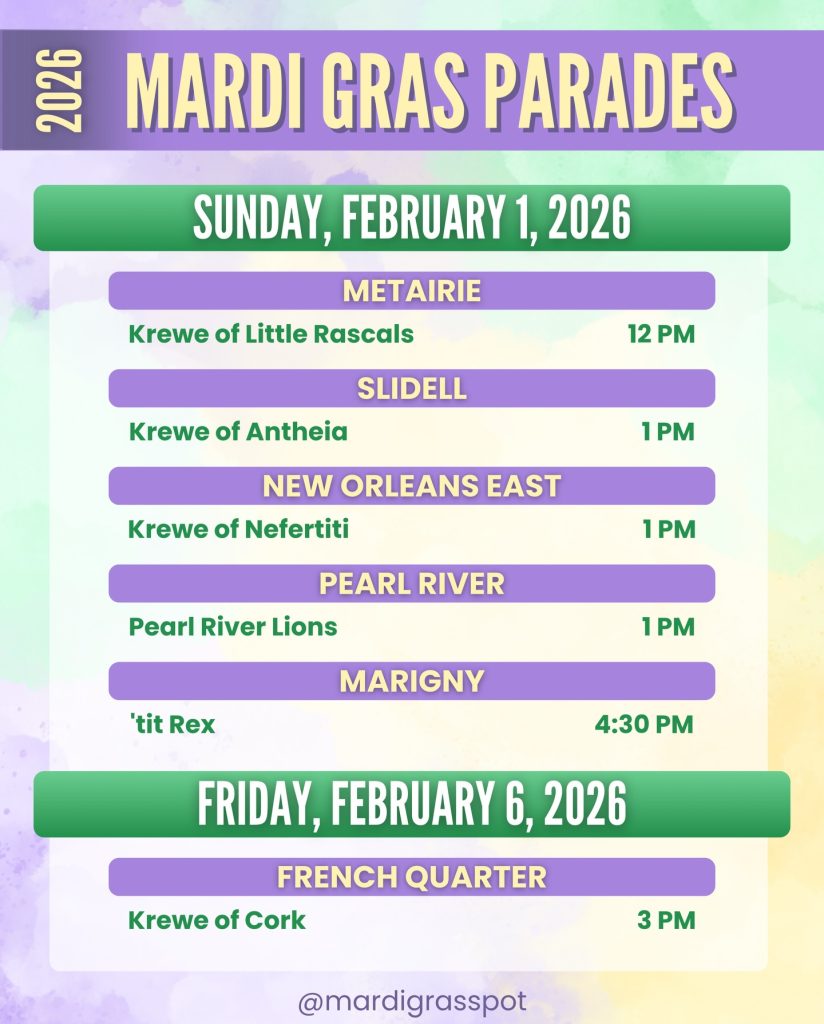
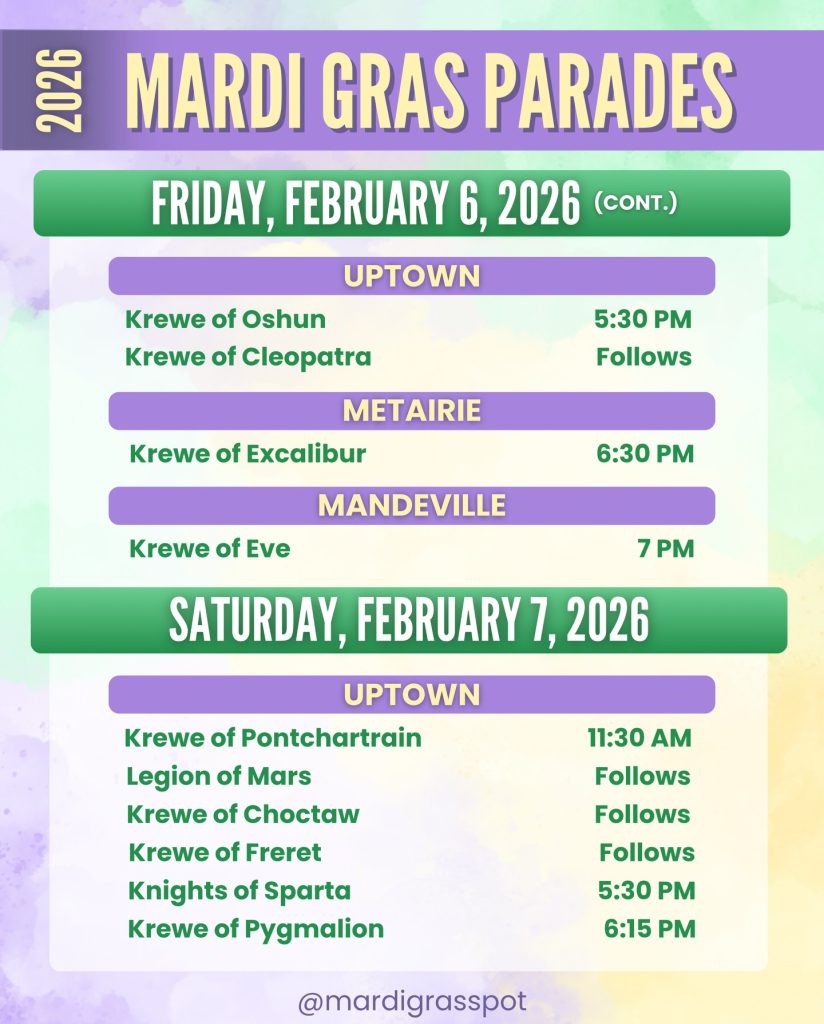
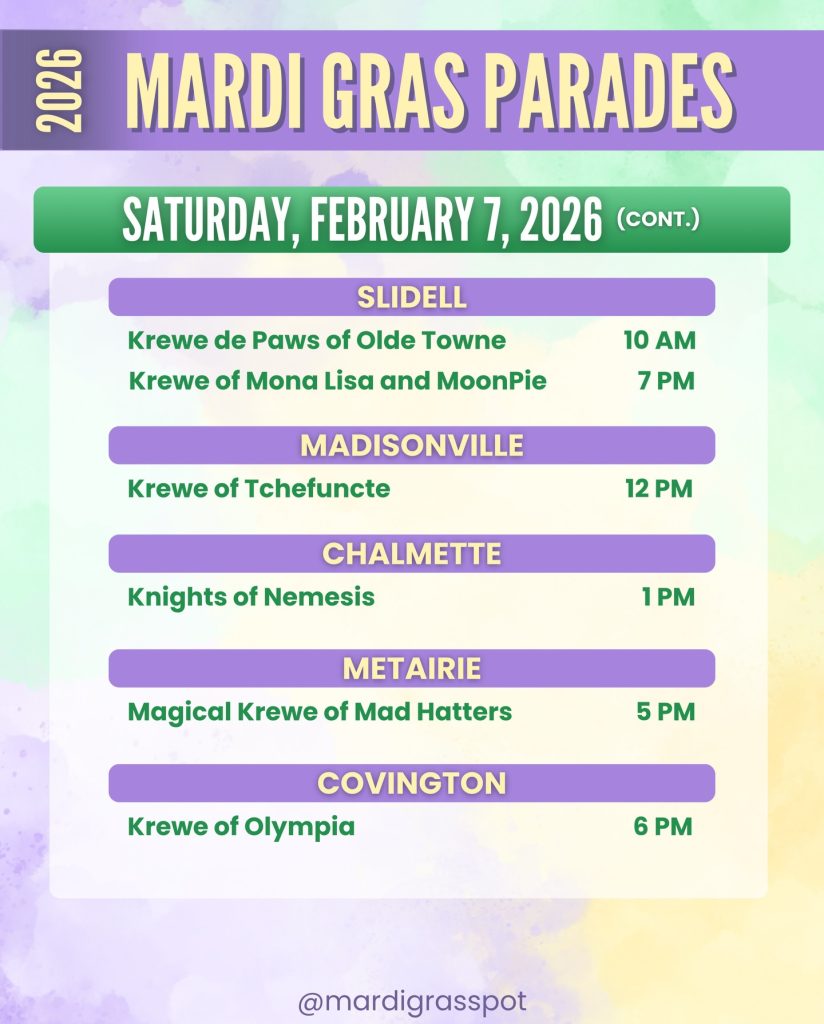
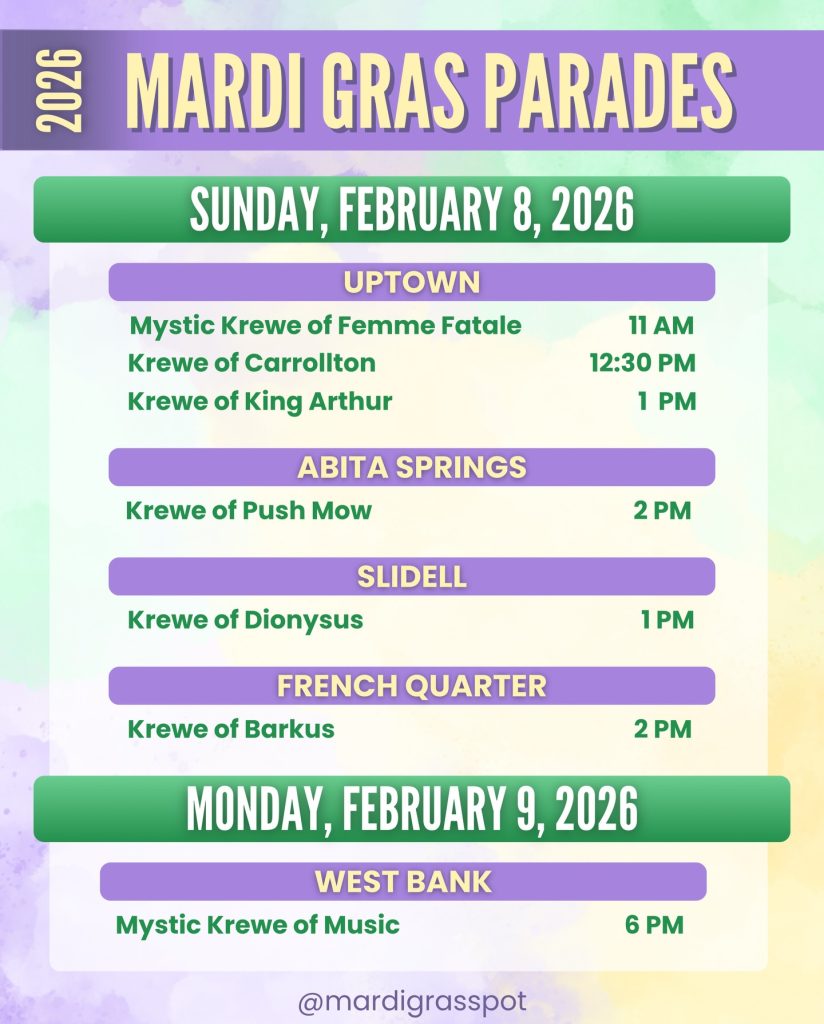
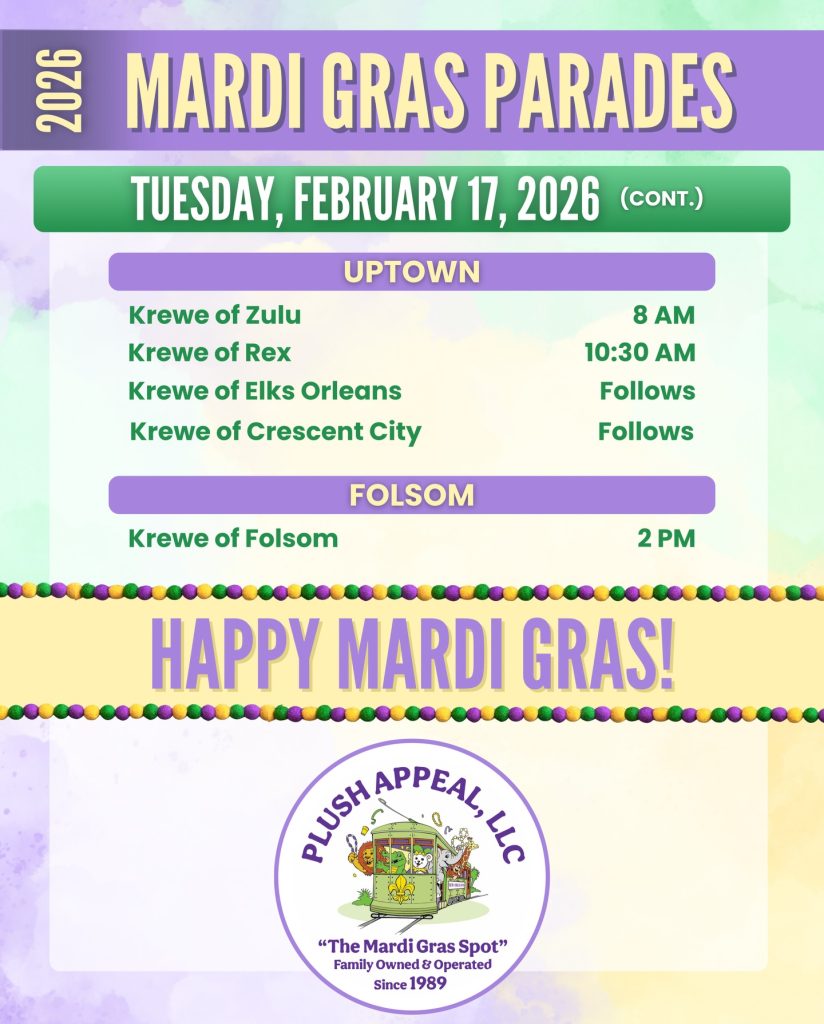
If you’re planning a trip, the final two weekends before Fat Tuesday are usually the best time to catch multiple parades without dealing with the absolute peak of Fat Tuesday crowds. Thank to @MardiGrasSpot for creating graphics to highlight the upcoming festivities.
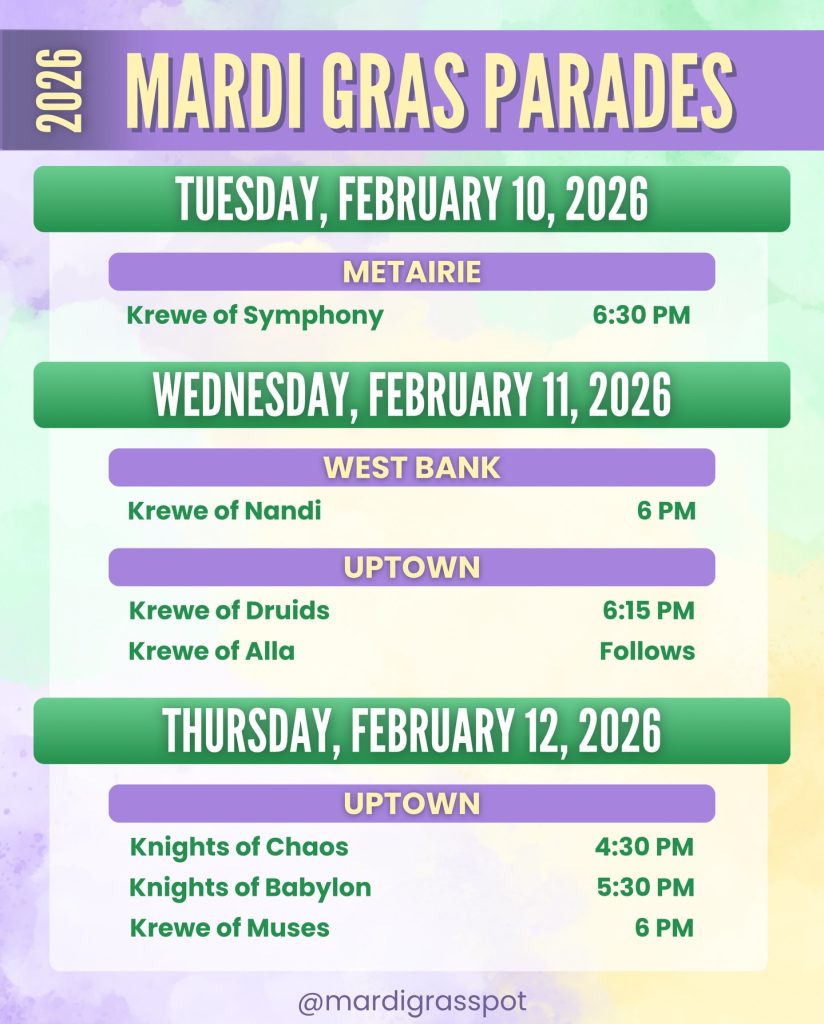
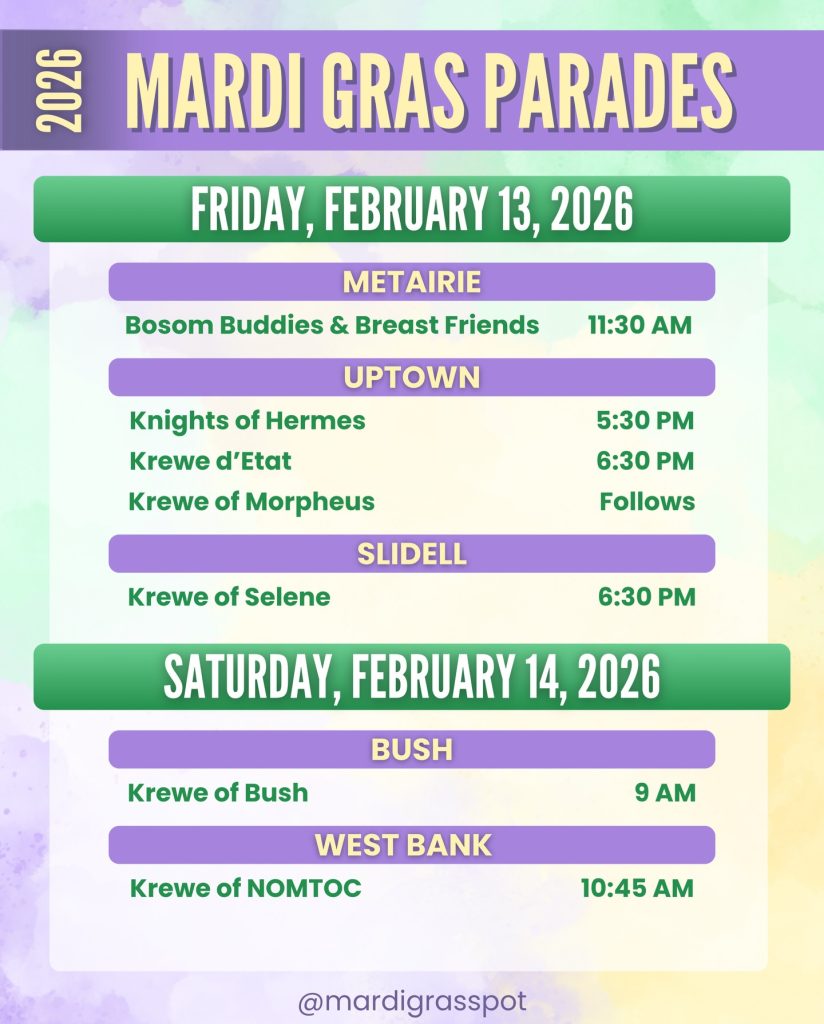
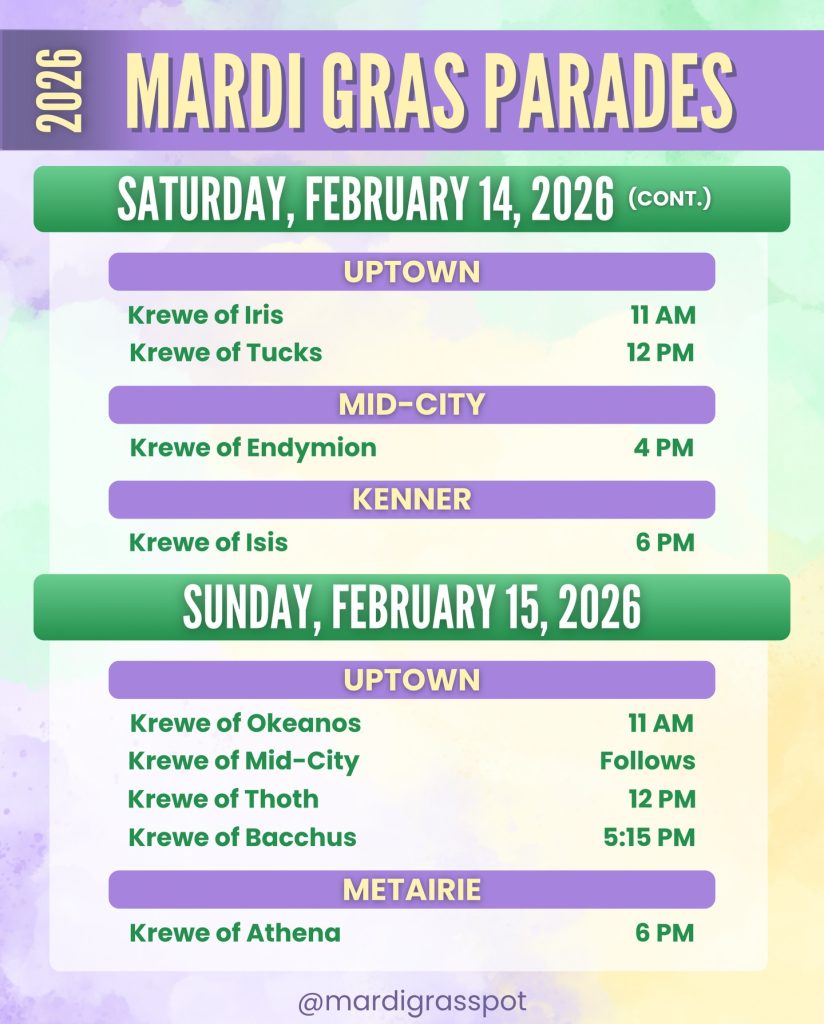
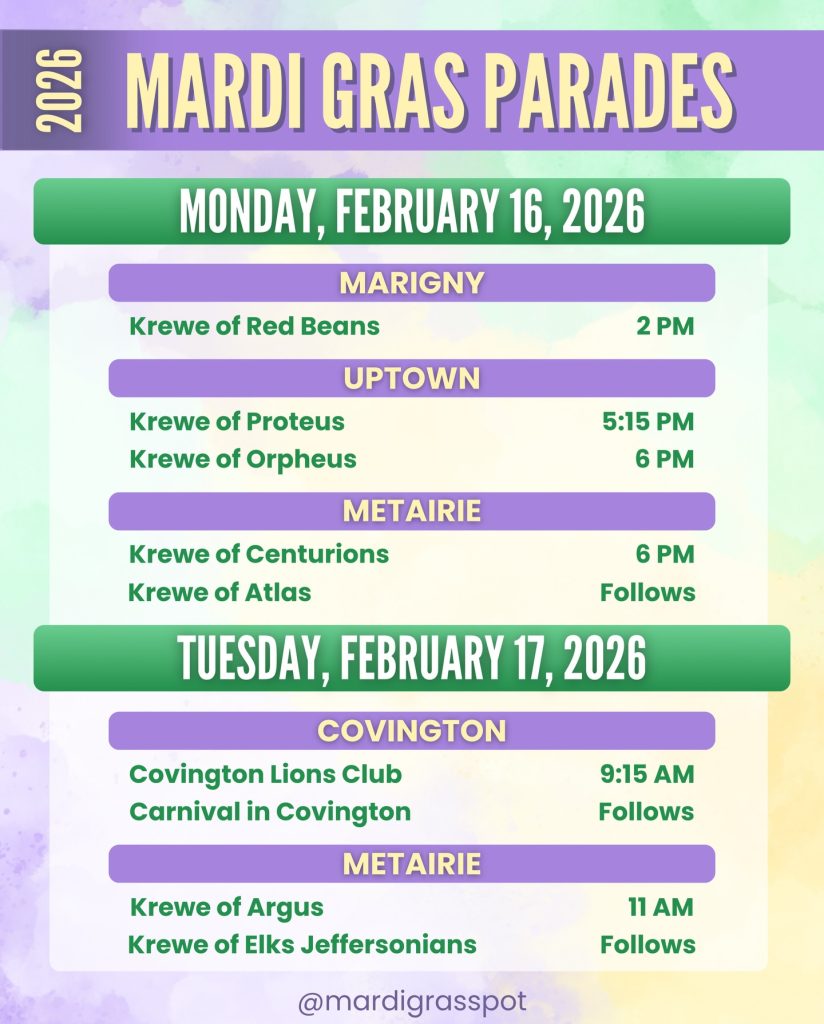
Where Parades Roll in New Orleans
New Orleans Mardi Gras parades roll on several main routes. The one that’s best for you depends on whether you want a family-friendly experience, big crowds and nightlife, or something more low-key.
Uptown New Orleans (St. Charles Avenue)
Best for: First-time visitors, families, and anyone who wants the classic parade experience.
Most of the big “super krewes” roll on the Uptown route, traveling along St. Charles Avenue and into the Central Business District. You’ll find:
- Wide neutral grounds (medians) where people set up ladders, chairs, and coolers.
- Plenty of room to spread out if you arrive early.
- A more relaxed, family-friendly vibe compared to the French Quarter.
French Quarter & Bourbon Street
Best for: Adults who want the party atmosphere rather than traditional parades.
Most big float parades don’t roll through the narrow French Quarter streets, but you’ll find:
- Walking parades with costumed groups and brass bands.
- Nonstop street parties, balcony throws, and people-watching.
- Very dense crowds and an adults-only atmosphere, especially at night.
Mid-City & Endymion
Best for: Visitors who want to see one of the biggest and most elaborate parades.
Krewe of Endymion, one of the largest super krewes, traditionally rolls through Mid-City before ending in the Superdome area for its extravagant ball. Expect:
- Massive, high-tech floats with lights and music.
- Huge crowds along the route, especially on Endymion Saturday.
- A very energetic, party-like atmosphere.
Metairie & Suburban Parades
Best for: Families, locals, and visitors who prefer easier parking and smaller crowds.
Just outside New Orleans, Metairie and other suburbs host their own parades, often on Veterans Memorial Boulevard. These can be a great option if you’re traveling with kids or staying outside the city center.
How to Choose the Best Parades for Your Trip
The Mardi Gras schedule includes dozens of parades, from small neighborhood krewes to massive super krewes with celebrity riders. Before you book your trip, decide what kind of experience you want:
- Big, flashy floats and famous krewes: Look for parades like Endymion, Bacchus, Orpheus, and Muses on the official schedule.
- Family-friendly: Daytime Uptown parades and suburban routes (like Metairie) are ideal.
- Local flavor: Smaller neighborhood krewes and walking parades offer a more intimate feel.
Once the city releases the annual parade schedule, you can map out which days have the most parades on the routes you’re interested in. Many visitors pick one big parade day and a couple of lighter days with smaller krewes.
Practical Tips for Catching a Parade
- Arrive early: For popular parades and weekend nights, arrive at least 1–2 hours before start time to claim a spot.
- Know the route: Double-check the latest route maps, as construction or events can cause changes.
- Bring essentials: Chairs, a small cooler, snacks, and a bag for catching throws (beads, cups, toys).
- Dress for the weather: Mardi Gras can be warm, chilly, or rainy — layers and comfortable shoes are key.
- Respect the barricades: Never cross in front of floats or under barricades. Stay behind the lines, especially with children.
Is Mardi Gras in New Orleans Family-Friendly?
Despite its wild reputation, much of Mardi Gras is very family-friendly when you choose the right locations and times. Uptown day parades and suburban routes are filled with kids on ladders, families grilling, and a relaxed atmosphere. The French Quarter and Bourbon Street at night, on the other hand, are better suited for adults.
Where to Stay for Easy Parade Access
If your main goal is to catch parades, look for accommodations:
- Along or near St. Charles Avenue: Easy access to many Uptown parades.
- In the Central Business District (CBD): Walkable to Uptown and downtown portions of routes.
- In Metairie or suburbs: Convenient for suburban parades and can be more budget-friendly.
Wherever you stay, book as early as possible — hotels and vacation rentals fill up quickly for prime parade dates.
Final Thoughts
To catch a Mardi Gras parade in New Orleans, you’ll want to time your visit for the final two weeks of Carnival and choose the route that matches your style — Uptown for classic floats and families, Mid-City for massive super krewes, the French Quarter for adult nightlife, or the suburbs for a calmer experience. With a little planning and flexibility, you can enjoy one of the world’s most famous celebrations up close, beads in hand.